
Physicists trap antimatter in a breakthrough that could explain why the universe exists

Physicists at Northwestern University have achieved an unprecedented level of quantum control over a single positron, the antimatter counterpart of an electron. The breakthrough could eventually help scientists answer one of the most fundamental questions in physics: Why does the universe exist as we know it?
The researchers captured a rapidly moving positron produced through radioactive decay, slowed it down, and cooled it to a temperature just above absolute zero. They then confined the particle within a near-perfect vacuum, isolating it from ordinary matter, which would cause it to annihilate.
Using this approach, the team created what they call a "one-positron quantum cyclotron." Within this system, the positron behaves somewhat like an artificial atom, allowing researchers to observe and precisely manipulate its individual quantum energy levels.
The achievement lays the groundwork for what could become the most rigorous test yet of the fundamental symmetry between electrons and positrons. The Standard Model of particle physics predicts that the two particles should behave as nearly perfect mirror images of each other.
By measuring the positron's magnetic properties with unprecedented accuracy and comparing them with those of an electron, scientists could uncover previously undetected differences. Any unexpected discrepancy would point to a weakness in the Standard Model and potentially offer clues to why the universe contains so much more matter than antimatter.
The research was published in Physical Review Letters.
"Antimatter gets its popular charm from science fiction," said Northwestern's Gerald Gabrielse, who led the study. "If you take an electron and an anti-electron (or positron) and collide them together, they both disappear. We describe that as annihilation, a concept that fuels science fiction writers' imaginations. The big mystery of the universe is the Big Bang should have created equal amounts of matter and antimatter. But, if that were true, it would annihilate, and we'd be left with nothing. There's clearly something wrong with that theory, and that's what we're trying to figure out."
Gabrielse is the Board of Trustees Professor of Physics at Northwestern's Weinberg College of Arts and Sciences and director of the university's Center for Fundamental Physics. Thomas Myers, a Ph.D. student working in Gabrielse's laboratory, is the study's first author.
Searching for Cracks in the Standard Model
The Standard Model is one of the most successful theories in modern science. It describes the universe's fundamental particles and three of its four fundamental forces (electromagnetic, strong nuclear and weak nuclear forces). Countless experiments have verified its predictions with remarkable accuracy.
Despite those successes, the theory remains incomplete. One of its most significant shortcomings is its inability to explain the overwhelming abundance of matter compared with antimatter in the observable universe.
"We know the Standard Model has to be wrong somewhere -- or at least incomplete," Gabrielse said. "For example, it cannot predict why the universe exists, so that's a pretty big loophole. We're very precisely examining the most fundamental and simple systems to find where the theory breaks down. We hope to find an unambiguous answer."
Gabrielse has devoted decades of his scientific career to investigating this mystery. His research group previously developed methods for isolating individual electrons and determining their magnetic properties with exceptional precision.
He also helped establish the field of low-energy antimatter research by pioneering techniques for slowing, capturing, and cooling antiprotons. The latest achievement combines these two areas of expertise, extending the sophisticated quantum control previously demonstrated with electrons to an individual antimatter particle.
Trapping Antimatter Without Touching It
Almost everything on Earth is composed of three familiar particles: electrons, protons, and neutrons. A universe made of antimatter could contain their respective counterparts: positrons, antiprotons, and antineutrons. According to Gabrielse, if everything on Earth were constructed from antimatter instead of ordinary matter, distinguishing between the two would be remarkably difficult.
The dramatic differences emerge when matter and antimatter come into contact. An electron and a positron, for example, can annihilate when they encounter one another. This makes storing antimatter particularly challenging, as contact with the material walls of an ordinary container would almost certainly destroy the trapped particle.
"If we want to study antimatter, we must handle it carefully," Gabrielse said. "To be clear, it's not dangerous. We don't have enough antimatter to make an explosion."
To overcome this problem, the Northwestern researchers employed an advanced particle trap that uses carefully configured electric and magnetic fields. These fields keep the positron suspended in an empty region of space, preventing it from coming into contact with the surrounding material.
By effectively creating a container that does not require the particle to touch any physical walls, the team has managed to keep a single positron confined in Gabrielse's laboratory for months.
Cooling Antimatter to Near Absolute Zero
Capturing a positron presents another considerable technical hurdle. Certain atomic nuclei release positrons as they undergo radioactive decay. For their experiment, the researchers used sodium-22, a rare radioactive isotope of sodium. Positrons emitted during this process initially carry tremendous amounts of energy.
The physicists substantially reduced the particle's speed before directing it into the trap's near-perfect vacuum. Inside, the temperature is maintained at approximately 300 millikelvins, equivalent to just 0.3 degrees above absolute zero.
Under these extremely cold conditions, the positron can settle into its lowest possible quantum energy state.
"We cool it down so much that it's in its quantum ground state," Gabrielse said. "We actually coaxed this very fast positron to sit there and behave for months at a time."
Putting Matter and Antimatter to the Ultimate Test
Beyond capturing and cooling the positron, the researchers demonstrated that they could deliberately change its individual quantum energy states and detect those changes.
Using microwaves tuned to specific frequencies, the physicists transferred carefully controlled amounts of energy to the particle and observed the resulting transitions between quantum states. This ability is crucial to their larger objective of determining the positron's magnetic properties with exceptional accuracy and comparing them directly with those of an electron.
In earlier research, Gabrielse and his colleagues used a one-electron quantum cyclotron to determine the electron's magnetic moment, a measure of its magnetic properties, with a precision of approximately one part in 10 trillion. That achievement ranks among the most precise measurements ever performed on an elementary particle.
The team now intends to conduct an equivalent measurement using the trapped positron. Comparing the two results could provide an extraordinarily sensitive test of current particle physics theories and potentially uncover evidence of previously unknown physics.
"Current theories suggest that there will be no difference in the two measurements," Gabrielse said. "If it turns out they are not equal, that would be the biggest discovery in physics in the last century."
The study, "One-positron quantum cyclotron," received support from the National Science Foundation (grant number 2110565).
Comments 0
Leave a Reply
Your email address will not be published. Required fields are marked *
Science
Explore All
Common sleep and anxiety drugs could be harming aging brains
Nearly one in three older adults with dementia or other cognitive disorders takes potentially harmful medications that can worsen brain function and i...

Peppermint oil significantly lowers blood pressure in just 20 days
3 hours ago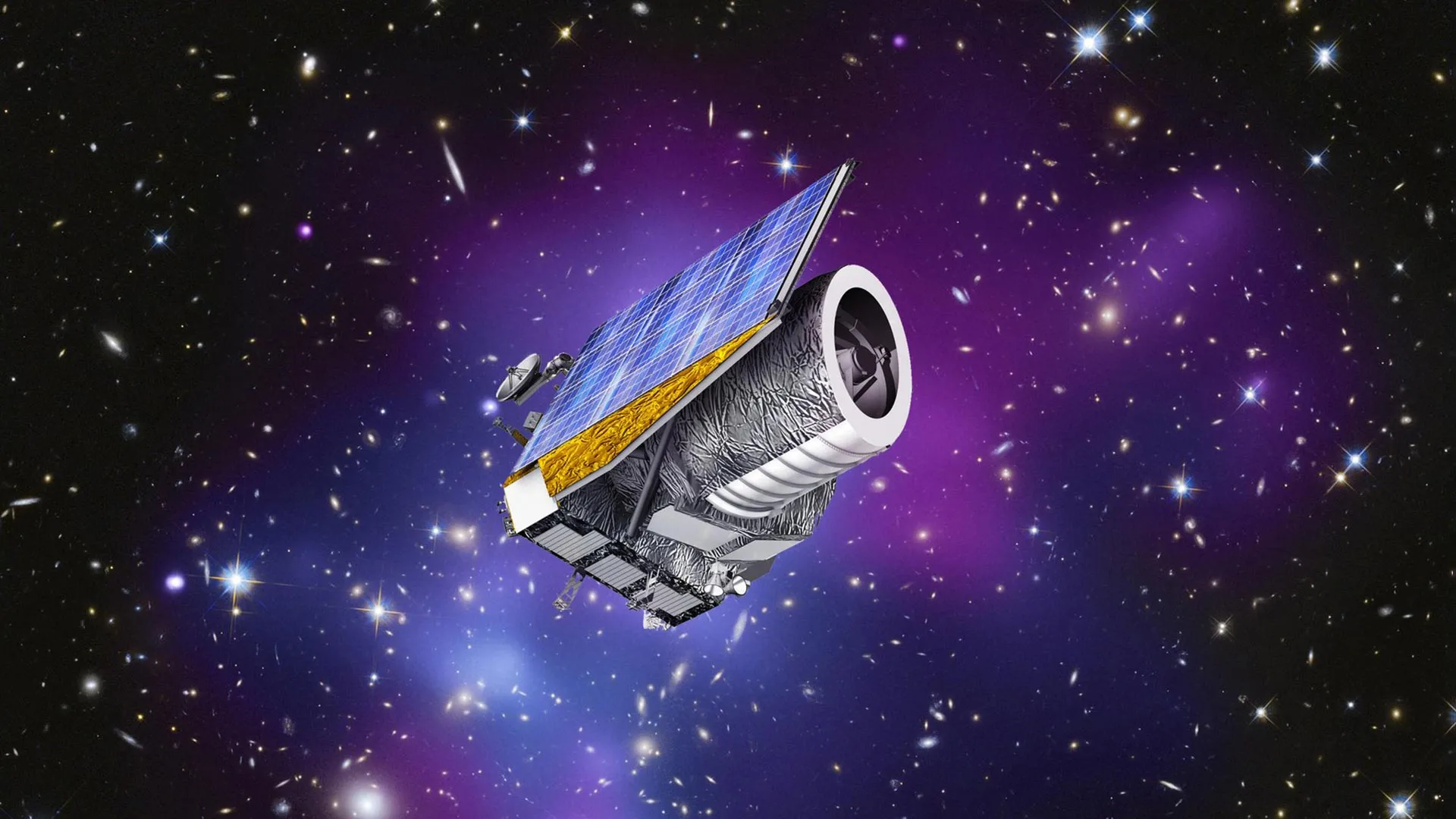
A space telescope hunting for dark matter just discovered something unexpected
3 hours ago
Physicists trap antimatter in a breakthrough that could explain why the universe exists
4 hours agoWhat is a thought made of? Why human consciousness may be beyond AI’s reach
4 hours agoWhats New
View All
The questions Jensen Huang and Nvidia will still have to answer about Megaspeed

AI Horror Short ‘Sikkal’ Wins WIF India x Google Flow Filmathon as Director Promita Banerjee Aims to Make ‘Films With Humans’

Trump to meet Abdul El-Sayed: Will he agree to a renamed Medicare-for-all?

Trinity Rodman out of USWNT’s World Cup qualifier due to shoulder injury

Bayern Munich’s Musiala checked for neurological symptoms in April 2025

Mike Newell Recalls Being Shot at in Colombia While Filming ‘Love in the Time of Cholera’ With Giovanna Mezzogiorno: ‘She Was Like, “F— All This!”’

Vijay Sethupathi’s ‘Maharaja’ Producer Confirms Hollywood Remake Approach as WAVES Film Bazaar Panel Weighs Whether Indian IP Can Travel

Catalan separatist Puigdemont to return to Spain on December 12

Veteran Nigerian Nollywood actor Pete Edochie dies aged 79
