
NASA’s Hubble Views Ocean of Stars in Groundwork for Roman
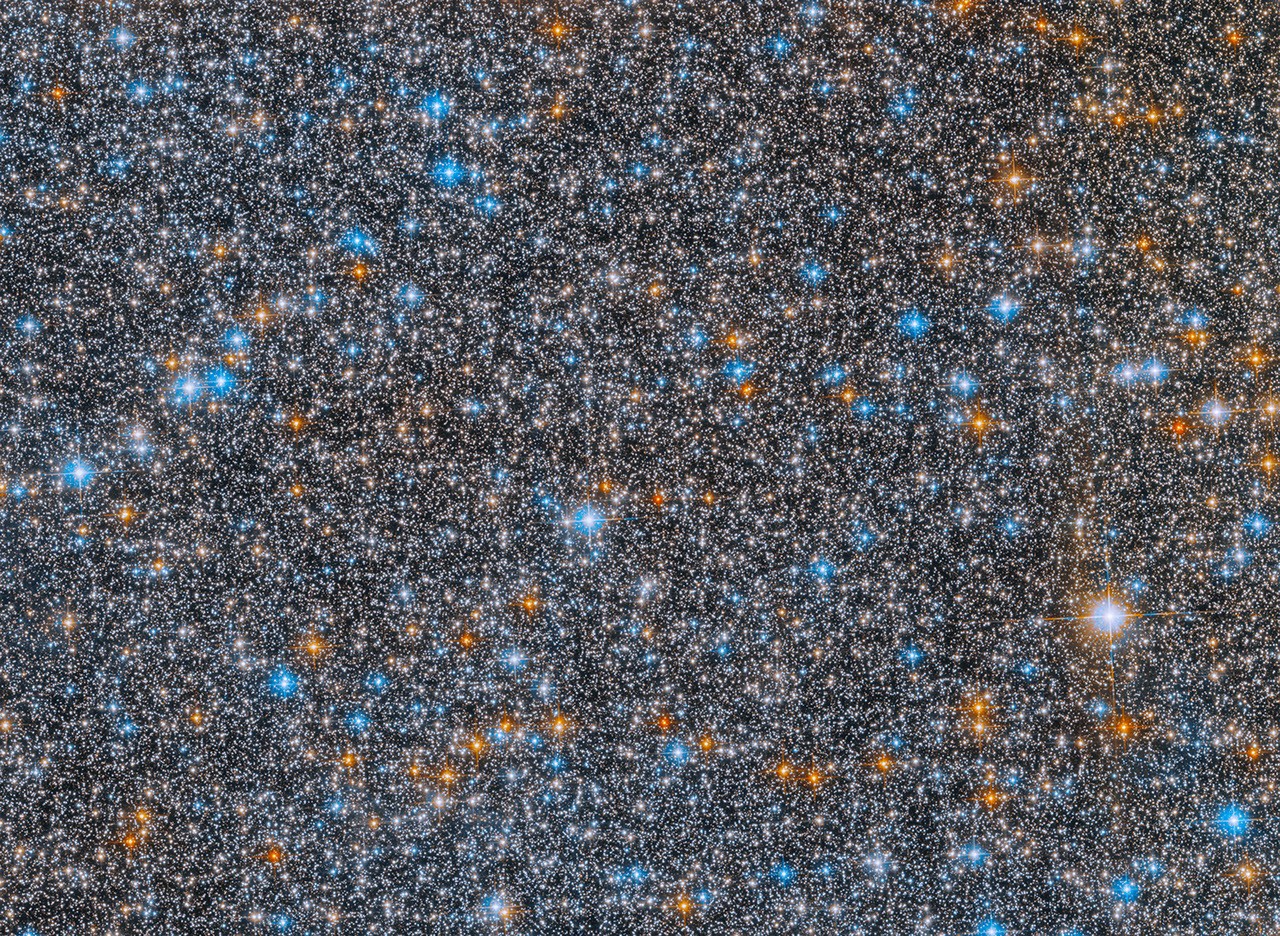
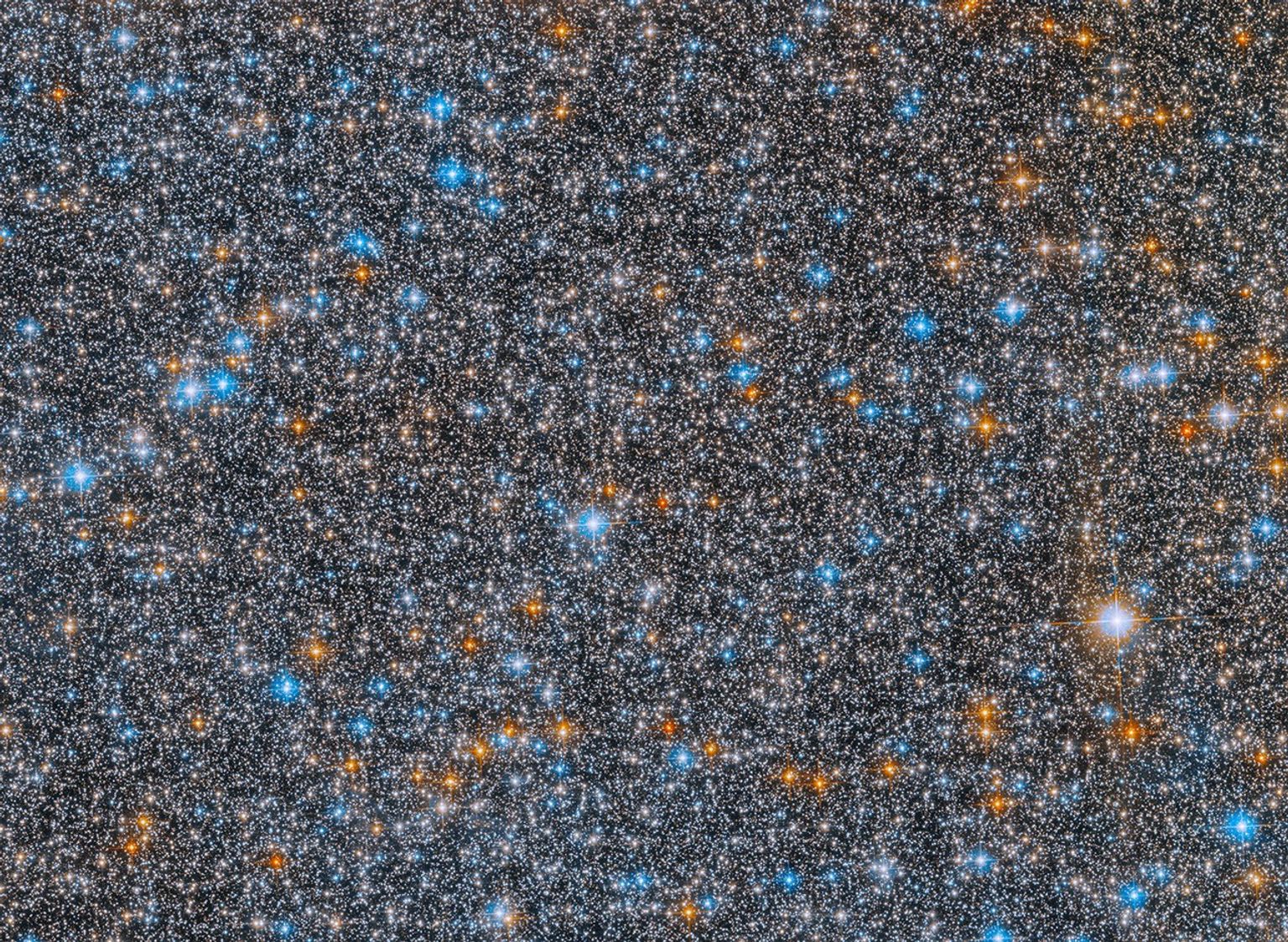
Credits: NASA, ESA, and S. Terry (University of Maryland); Image Processing: G. Kober (NASA/Catholic University of America)
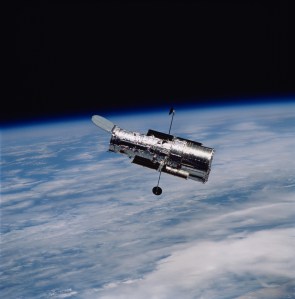
NASA Hubble Mission Team
Goddard Space Flight Center
Nov 25, 2026
An expanse of stars gleams in a rainbow of colors in these NASA Hubble Space Telescope images of the Milky Way. The images focus on an area of sky toward the galactic bulge, a densely packed, spherical region of stars that surrounds the center of a galaxy’s disk. These Hubble observations are part of a survey that will help researchers better interpret upcoming Nancy Grace Roman Space Telescope observations as they seek to characterize the stars and search for exoplanets in this busy region of our galaxy.
Astronomers study the Milky Way’s galactic bulge because it holds nearly a quarter of the galaxy’s stellar mass, and its proximity allows them to examine the region in greater detail. Although we can see the glow from these crowded spheres of stars in other galaxies, they are too jam-packed and far away to resolve individual stars. By studying the Milky Way’s galactic bulge, researchers hope to find new planets and better understand how galaxies form, evolve, and interact over billions of years.
Hubble views the universe primarily in ultraviolet, visible, and near-infrared light, while Roman collects data in near-infrared light and some visible light. Because researchers wish to compare Hubble’s observations to future Roman observations, Hubble looked at the region in wavelengths that overlap with Roman’s areas of sensitivity, the red end of the visible spectrum and near-infrared wavelengths.
Hubble’s high resolution allows its instruments to collect data on the brightness, ages, composition, and motion of stars over time. With this knowledge, astronomers can search for potential exoplanets, determine the location of black holes or dark matter, and better understand our galaxy’s environment and evolution.
A key component of Roman’s future observations is the search for exoplanets by capturing microlensing events, a type of gravitational lensing that occurs when light from a more distant object is magnified and distorted by the mass of a closer object along the line of sight. The way light from the distant star is distorted and magnified can reveal clues to the nature of the foreground star and any planets it may have. Hubble's observations will help characterize stars in the region before they undergo a lensing event. Months or years in the future, when Roman captures a microlensing event, researchers can compare Hubble data to Roman data of the event, making it easer to interpret. These microlensing events are on a much smaller scale, that of stars and planets, than larger gravitational lenses that occur around galaxies and galaxy clusters.
Over Hubble’s lifetime, it has observed our galaxy’s central bulge many times. These legacy surveys include the WFC3 Galactic Bulge Treasury Program that used Hubble’s Wide Field Camera 3 to study the brightness, precise positions, and motions of stars in this congested part of our galaxy. It also includes the Sagittarius Window Eclipsing Extrasolar Planet Search (SWEEPS) that used Hubble’s Advanced Camera for Surveys to look at 180,000 stars in the bulge of our galaxy. These new observations come from an observing program (#17776: S. Terry) designed to aid Roman in its search for exoplanets, black holes, neutron stars, and more. The data also adds to Hubble’s continuing legacy of high-precision observations of stars in the galactic bulge.
Media Contact:
Claire Andreoli
NASA's Goddard Space Flight Center, Greenbelt, MD
claire.andreoli@nasa.gov
Keep Exploring
Discover More Topics From NASA
Comments 0
Leave a Reply
Your email address will not be published. Required fields are marked *
Science
Explore All
NASA’s Hubble Views Ocean of Stars in Groundwork for Roman
These Hubble observations are part of a survey that will help researchers better interpret upcoming Nancy Grace Roman Space Telescope observations as...

Common sleep and anxiety drugs could be harming aging brains
5 hours ago
Peppermint oil significantly lowers blood pressure in just 20 days
5 hours ago
A space telescope hunting for dark matter just discovered something unexpected
5 hours agoPhysicists trap antimatter in a breakthrough that could explain why the universe exists
6 hours agoWhats New
View All
Vatican-Produced Doc ‘Green Lava’ Drops Trailer Featuring Justin Bieber’s ‘Everything Hallelujah’ (EXCLUSIVE)

Danny McBride Stars in Another Kalshi Ad as Annoying Uncle at Thanksgiving (EXCLUSIVE)

Banff World Media Festival’s Jenn Kuzmyk to Exit After Nine Years as Executive Director

GTA 6’s Fake Tunnel Is A Great Way To Turn Your Muscle Car Into Scrap Metal

Gilles Villeneuve Biopic ‘The Rise of a Legend’ Gives Racing Genre a Grungier Spin: It’s the ‘Anti-“F1”’

Five Russian military jets hit in airfield strike, says Ukraine

GTA 6 Modders Are Trying To Vibe-Code A PC Port, And It’s Not Going Well

Todoist confirms 6% of customers’ details were stolen in data breach

The Witcher 4 Wants To Be The GTA 6 Of The Witcher Franchise
